
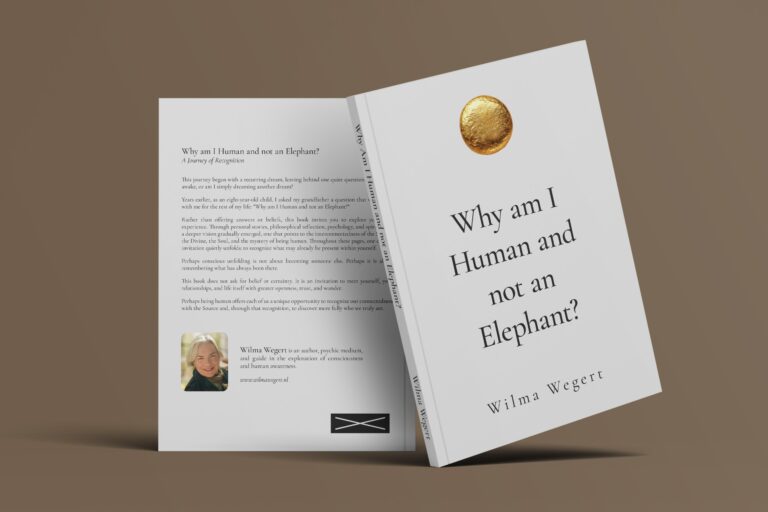
The Book
Why am I Human and not an Elephant?
(forthcoming book)
A philosophical exploration of Consciousness, the Source, the Divine, the Soul, and the Human experience. What is revealed is not a new truth, but a remembrance of what has never truly been lost.
Below is an excerpt from the publisher’s editorial review.
This manuscript presents a deeply personal and philosophical exploration of consciousness, spirituality, and the nature of existence through the author’s original framework centered on the concepts of the Source, the Divine, the Soul, and Human awareness.
Blending autobiographical experiences with symbolic interpretations of spiritual traditions, the work invites readers to reflect on questions of identity, interconnectedness, love, and personal transformation. Rather than presenting its ideas as doctrine, the author consistently frames the book as an invitation to contemplation, encouraging readers to explore these concepts through their own lived experiences.
The manuscript possesses a calm, reflective tone throughout and demonstrates a sincere commitment to expressing complex spiritual ideas in accessible language. Its greatest appeal will likely be to readers interested in non-dual philosophy, contemplative spirituality, consciousness studies, and personal growth.
Another notable strength is the effective use of symbolism. Figures such as Mary, Maitreya, Jesus, and Mary Magdalene are presented as archetypal representations of qualities of consciousness rather than rigid religious figures. This symbolic approach broadens the manuscript’s accessibility by inviting readers from diverse spiritual backgrounds to engage with the material without requiring adherence to a particular religious tradition. The inclusion of personal stories is particularly effective.
The writing is clear, gentle, and emotionally engaging. Complex metaphysical concepts are generally expressed in language that remains approachable for a broad readership, allowing readers without extensive philosophical or theological backgrounds to engage with the material.
The manuscript also demonstrates impressive thematic consistency. Throughout the chapters, the central ideas of unity, remembrance, consciousness, and interconnectedness are developed consistently, providing the book with a coherent philosophical foundation.